 Eat More Fruits & Vegetables Eat More Fruits & Vegetables
TRUE or FALSE?
Anything that’s fun to eat can’t be good for you.
FALSE!
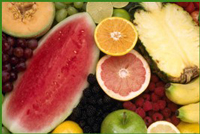
Just consider watermelon, strawberries, pineapple, and bananas.
Fruit tastes sweet, looks beautiful, is fun and easy to eat, and provides loads of good nutrition!
And while vegetables may not be quite as inviting, they are equally important to disease prevention and optimal health.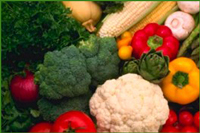
Fruits and vegetables help prevent cancer, heart disease, and diabetes, as well as protect against
macular degeneration in the eyes.
They also support weight loss because their calorie content is generally
low due to their high water content and because their high fiber content fills
you up faster so that you’re less likely to overeat.
Further, fruits and vegetables provide hundreds of vitamins and minerals that are essential to good health.
When planning your meals, think about including a rainbow of produce items that are deep in color. Research increasingly shows that foods with color and rich flavor contain more phytochemicals – plant compounds
that aid in disease prevention and health maintenance.
RED foods contain lycopene which helps prevent cancer. ORANGE foods contain beta-carotene which helps prevent cancer. YELLOW and GREEN foods help prevent cancer and vision loss. BLUE and WHITE foods can help prevent heart disease and cancer.
Try to eat at least 2 cups of fruit and 2 1/2 cups of vegetables every day. The pot of gold at the end of this rainbow is reduced health care costs and optimal health.
Follow the rainbow of
fruits and vegetables.
 |













