|
|

Enjoy More Fruits and Vegetables
The previous Dietary Guidelines for Americans recommended five or more servings of fruits and vegetables a day. That recommendation was not based on what was optimal for good health, but rather on what seems a realistic objective given the fact that most Americans were eating just two servings per day! That’s right: Think potatoes and tomatoes, also known as French fries and catsup. The current Dietary Guidelines recommend 2 cups of fruit and 2½ cups of vegetables per day for a reference 2,000-calorie intake, with higher or lower amounts depending on the calorie level. Explore Lesser-Known Fruits
Follow the rainbow for optimal nutrition and buy fruits and vegetables local and/or organic as much as possible.
Whole Fruit vs. Fruit Juice
|












 The most important proactive eating behavior that we can adopt today is to eat more fresh fruits and vegetables.
Daily consumption of fruits and vegetables may help prevent many chronic diseases, including some cancers
(oral cavity, pharynx, larynx, lung, esophagus, stomach, and colon-rectum), heart disease, and diabetes,
as well as protect against macular degeneration in the eyes.
The most important proactive eating behavior that we can adopt today is to eat more fresh fruits and vegetables.
Daily consumption of fruits and vegetables may help prevent many chronic diseases, including some cancers
(oral cavity, pharynx, larynx, lung, esophagus, stomach, and colon-rectum), heart disease, and diabetes,
as well as protect against macular degeneration in the eyes. 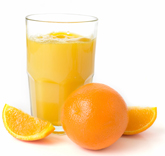
WHOLE FRUIT |
Dietary Fiber (Grams) |
FRUIT JUICE |
Dietary Fiber (Grams) |
| Apple, 1 medium | 3.7 | Apple juice, 8 ounces | 0.2 |
| Orange, 1 medium | 3.4 | Orange juice, 8 ounces | 0.5 |
| Prunes, 1 cup | 4.4 | Prune juice, 8 ounces | 2.6 |
| Pineapple, 1 cup diced | 1.9 | Pineapple juice, 8 ounces | 0.5 |
Look for the 100% Juice on the Label
Products with the following labels are not 100-percent juice and can contain a lot of added sugar:
Fruit drink
Cocktail
Beverage
Punch
In addition, many fruit drinks are fortified with vitamin C but again, they may not contain much juice. Whether it’s fruit or vegetable, for the most nutrition, check the label and be sure you’re buying 100 percent juice.
