
Hazards and Controls
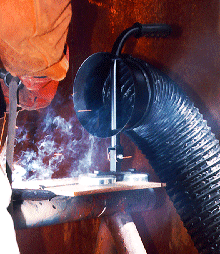 It is important to understand the hazards involved when performing welding operations and the proper safety guidelines to control those hazards. Welding hazards include:
Heat stress
Smoke
Toxic fumes
Dusts
Burns
Fires
Explosions
Electric shock
Light radiation
Projectiles
Noise
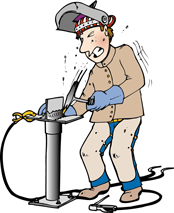
Hazard prevention for welding includes:
Personal protective equipment
Protective clothing
Respiratory protection
Proper ventilation of the work area
Fire safety
Safe equipment
Chemical Hazards
-
Acetylene is the most commonly used fuels for gas welding, cutting and brazing. It is capable of displacing oxygen from the atmosphere, reducing it to a level below that your body requires. Acetylene becomes unstable at excessive pressures, so do not pressurize it above 15 psi or 30 psi.
Chromium is the primary alloying agent in stainless steel. Chromium compounds are strong oxidizing agents and are extremely toxic and irritating to the skin, eyes, and mucous membranes. Although welding under normal operations would not be expected to produce hazardous concentrations of chromium compounds, welding of stainless steel should be carried out in well-ventilated areas.
Fluoride compounds are found in the coating of several types of fluxes used in welding. Exposure to these fluxes may irritate the eyes, nose, and throat and exposure to fluoride dusts and fumes may produce skin rashes.
Zinc is used in large quantities in the manufacture of brass, galvanized metals and various other alloys. Exposure to these fumes is known to cause metal fume fever, which produces common flu like symptoms.
Radiation
Skin exposure to ultraviolet radiation can result in severe burns and damage the lens of the eye. Infrared radiation, produced by the electric arc and other flame cutting equipment may heat the skin surface and the tissues immediately below the skin surface.
Intense visible light exposure to the eye (especially in arc welding) can produce adaptation, pupillary reflex and shading of the eyes.