Types of Antimicrobials
Antimicrobial products are divided into two categories based on the type of microbial pest against which the product works. Non-public health products are used to control growth of algae, odor-causing bacteria, bacteria which cause spoilage, deterioration or fouling of material and microorganisms infectious to animals. Public health products are intended to control microorganisms infectious to humans in any inanimate environment. Antimicrobials play a major role in preventing foodborne diseases which have increased at an alarming rate in recent years. The primary use of these agents in the food and food-contact arena is to control organisms that cause human disease. More than 50% of antimicrobial pesticides are considered to be public health related products and control disease-causing microorganisms such as E.coli, HIV and the tuberculosis bacterium.
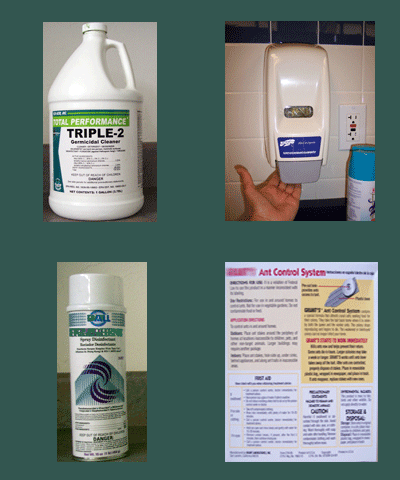 The more commonly used public health antimicrobial products include the following:
Sterilizers
Used to destroy or eliminate all forms of microbial life including fungi, viruses, and all forms of bacteria and their spores. Spores are considered to be the most difficult form of microorganism to destroy. Therefore, the EPA considers the term "Sporicide" to be synonymous with "Sterilizer." Sterilization is critical to infection control and is widely used in hospitals on medical and surgical instruments and equipment. Types of sterilizers include steam under pressure (autoclaving), dry heat ovens, low temperature gas (ethylene oxide) and liquid chemical sterilants. Gaseous and dry heat sterilizers are used primarily for sterilization of medical instruments. Liquid sterilants are primarily used for delicate instruments which cannot withstand high temperature and gases.
Disinfectants
Used on hard, inanimate surfaces and objects to destroy or irreversibly inactivate infectious fungi and bacteria, but not necessarily their spores. Disinfectant products are divided into two major types: hospital and general use. Hospital type disinfectants are the most critical to infection control and are used on medical and dental instruments, floors, walls, bed linens, toilet seats, and other surfaces. General disinfectants are the major source of products most commonly used in households, swimming pools, and water purifiers.
Sanitizers
Used to reduce, but not necessarily eliminate microorganisms from the inanimate environment to levels considered safe, as determined by public health codes or regulations. Sanitizers include food contact and non-food contact products. Sanitizing rinses for surfaces such as dishes and cooking utensils, as well as equipment and utensils found in dairies, food-processing plants, and eating and drinking establishments comprise the food contact sanitizers. These products are important because they are used on sites where consumable food products are placed and stored. Non-food contact surface sanitizers include carpet sanitizers, air sanitizers, laundry additives, and in-tank toilet bowl sanitizers
Antiseptics and Germicides
Used to prevent infection and decay by inhibiting the growth of microorganisms. Because these products are used in or on living humans or animals, they are considered drugs and are thus approved and regulated by the Food and Drug Administration (FDA).
In all, there are more than 15 different classes of antimicrobials. They differ in chemical structure and mechanism of action. Specific antimicrobials are necessary for the treatment of specific pathogens.
Alcohols
In general, the use of alcohols as an antimicrobial involves using ethanol, isopropanol, and ethyl alcohol. Alcohols are wiped over surfaces and allowed to evaporate quickly. They have wide microbial activity, are non-corrosive but are also very flammable, making them a potential fire hazard. Alcohols must be properly stored in a cool, well-ventilated area. They have limited residual activity due to rapid evaporation, and have limited activity in the presence of organic material for the same reason. They are more effective when mixed with water than undiluted. Alcohols also irritate skin and are generally too expensive for general use as a surface disinfectant. Alcohols are not effective against fungal or bacterial spores.
Aldehydes
Aldehydes have a wide microbial activity and are effective against spores and fungi. They can be somewhat inactivated by organic matter, but show signs of slight residual activity. The various aldehyde chemicals are known to have irritant and toxic properties and are considered to be extremely hazardous.
Halogen
Halogen-based products are rapid, effective disinfectants when proper cleaning has been done prior to application. These disinfectants are completely neutralized by blood or organic matter, are corrosive and relatively unstable, which may limit their use in some environments. Common halogens include chloramines, chlorine, hypochlorites and iodine.
Oxidizing
Oxidizing agents are strong oxidizers and used for high-level disinfection and sterilization. They act by oxidizing the cell membrane of microorganisms and attack the cell DNA which results in a loss of structure and leads to cell death. Common oxidizing agents include hydrogen peroxide, chlorine dioxide, ozone, acidic electrolyzed water, peracetic acid, potassium permanganate and potassium peroxymonosulfate.
Phenolic Compounds
Phenol and phenolics are the active ingredients in most bottles of common household disinfectants. Phenolics are less toxic, irritating, and corrosive and more often used in place of phenols due to the toxic nature of phenols. Phenolics are more toxic than quats, but are more effective against TB pathogens and other bloodborne pathogens.
Quaternary Ammonium Compounds
Quats, as they are known, are typically used in low-level sanitization situations for cleaning and disinfecting surfaces. Quats are usually odorless, non-staining, non-corrosive to metals, fairly non-toxic, yet highly effective against bacteria, fungi and viruses. Quats provide a safe and effective neutral pH disinfectant-cleaner without damaging floor finishes or sensitive floor surfaces. In addition, quats are economical and extremely effective odor control agents and create few problems for custodial workers.
Chlorine Bleach
Chlorine bleach solutions are very effective disinfectants, but present several problems. Businesses have curtailed the use of bleach for cleaning and disinfecting for the following reasons:
causes irritation from fumes and very caustic to human tissue,
lacks detergency,
adversely reacts with other chemicals to form toxic gas,
emits unpleasant odors
attacks and corrodes metal surfaces and can permanently discolor other surfaces,
discolors fibers and colored surfaces,
damages floor finishes,
rapidly loses disinfecting strength, and
requires more to equal other disinfectants like quaternaries.
To help decide the right antimicrobial pesticide for your use click on the General Guide List for Selecting the Proper Disinfectant that Meets Your Requirements table.