
Introduction
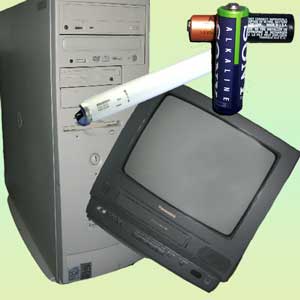 Common items that have traditionally been thrown into household's or small business trash cannot be safely disposed of in landfills. These common items are referred to as hazardous waste and some as universal waste (u-waste). As of February 9, 2006, all u-waste items are banned from the trash.
What is Universal Waste?
Universal waste is hazardous waste that is more commonly used, and poses a lower risk to people and the environment than other hazardous waste. In addition, universal waste is generated by a wide variety of people rather than just industrial businesses that primarily generate other hazardous waste.
Not all waste products of a particular type are hazardous waste and universal waste. For example, thermometers that contain mercury are universal waste, but thermometers that contain alcohol are neither hazardous waste nor universal waste.
Federal and State regulations identify universal waste and provide simple rules for handling, recycling, and disposing of them to promote proper collection and recycling. The regulations, called the “Universal Waste Rule,” are in the California Code of Regulations, title 22, division 4.5, chapter 23.
California Code of Regulations
The Department of Toxic Substances Control's hazardous waste regulations are located in the official version of the California Code of Regulations (CCR) at Title 22 Social Security, Division 4.5, Environmental Health Standards for the Management of Hazardous Waste, Chapter 23. Standards for Universal Waste Management, Article 2. Standards for Small Quantity Handlers of Universal Waste.