Fire Hazards
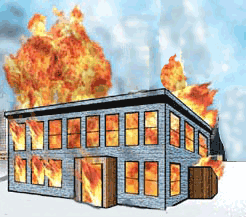 Woodworking shops are inherently prone to fires and explosions, because:
Shops contain large quantities of wood and wood products, and flammable materials such as paints, oil finishes, adhesives, and solvents, as well as liquid propane for internal combustion engines.
Shops produce abundant sawdust, which will ignite and burn far more easily than whole pieces of lumber. Sanders, routers, and shapers produce large amounts of very fine dust which is especially flammable. Fine dust can accumulate on rafters and on other building components and in many unexpected spots far from the point where the dust was generated.
Prevention
Stopping dust build-up is the best way to prevent a fire or explosion in the woodworking shop. The most efficient way to control dust is by using exhaust ventilation and by practicing good housekeeping.
Dust is best collected where the machine is operated and the dust is first generated. Well-designed ducts and vacuum hoods can collect most dust before it reaches the equipment operator. Very fine dust that escapes point-of-source collection can be captured by general exhaust points located along the ceiling. Ceiling exhaust points can capture the escaped dust from most machines, except those that produce the very finest dust or large quantities of dust.
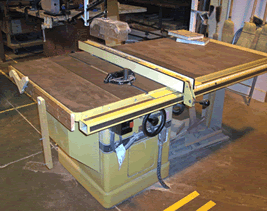 Good housekeeping and periodic hand cleaning of the shop are necessary to capture the dust that escapes from even the best exhaust system and accumulates on rafters and other hidden areas. It is extremely important to inspect and clean the exhaust ventilation system on a regular basis to maintain its maximum efficiency.
In addition to practicing good housekeeping and frequent ventilation-system maintenance, be sure to follow these shop safety techniques to prevent fire or explosion:
Properly use and store flammable materials such as paints, finishes, adhesives, and solvents.
-
Separate combustible materials (such as lumber stock) from flammable materials (such as chemical solvents) and keep both away from ignition sources.
Separate jobs that are particularly prone to fire and explosion hazards: for example, spray painting, or welding should not be done in the same area.
Recognize, avoid, and correct potentially hazardous conditions and behaviors.
Read and understand the manufacturer's manual for each piece of equipment you will operate.
Use electrical systems that are rated for the machines you plan to use. Make sure circuits are protected by appropriate circuit breakers. Ground all equipment prone to accumulating static electrical charges. Ground the entire building to ensure safety from lightning strikes.
Make sure all equipment has a hazard classification rated for your work environment.
Do not blow dust with compressed air. Air-blown dust creates a dust cloud that presents the greatest explosion hazard.
Provide continuous local exhaust ventilation on all woodworking machines. The local exhaust systems must have a suitable collector. Dust collection systems must be located outside the building, unless exceptions described in NFPA standards are met.
Make sure that multiple emergency exits are well marked and easily accessible. These exits should lead people directly away from areas where hazards are greatest.
Make sure that portable fire extinguishers are readily accessible and fully charged with fire retardants. Extinguishers must be appropriate for the types of fires likely to occur in the area.