
Basics of Electricity
What is Electricity?
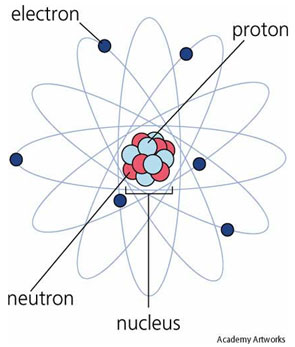 There are many definitions of electricity, but for the most part, we know it as a source of energy that powers our electronic devices, lights our homes and workplace, and a whole lot more. More scientifically speaking, electricity is the flow of electrons. All matter is made up of atoms, and an atom has a center, called a nucleus. The nucleus contains positively charged particles called protons and uncharged particles called neutrons. The nucleus of an atom is surrounded by negatively charged particles called electrons. The negative charge of an electron is equal to the positive charge of a proton, and the number of electrons in an atom is usually equal to the number of protons. When the balancing force between protons and electrons is upset by an outside force, an atom may gain or lose an electron. When electrons are "lost" from an atom, the free movement of these electrons constitutes the same kind of electric current that we utilize on a daily basis.
Basically, there are two kinds of electricity: static and dynamic. Static electricity (stationary) is characterized by the buildup of electric charge on the surface of an object. Dynamic electricity (moving) is characterized by the flow of electrons through a conductor, such as the copper wire found in most electrical cords. Conductors contain many free electrons and are capable of carrying an electric current. Good conductors include copper, gold, silver and aluminum. Materials that contain relatively few free electrons are called insulators. Non-metallic materials such as wood, rubber, plastic, and glass are insulators. These materials offer a great resistance to the flow of electricity and help shield us from electric shock.
Grounded Electrical Systems
Electricity always seeks to return to its source and complete a continuous circuit. A typical modern circuit has two conductors: hot and neutral. Electricity travels from the service panel to home appliances through the hot conductor, and returns the current to the main service panel through the neutral conductor. A third, or grounding, wire is also connected to all outlets and metal boxes. Grounding wires are connected directly to the earth through a metal grounding rod or a cold water pipe. Should a short circuit or an overload occur, any extra electricity will find its way along the grounding wire to the earth. Grounding is an essential safety feature.
Electrical Terminology
Amperage
The unit used to measure the amount of electrical current. Amperage is often referred to as “current” by those who work in the field. Small diameter wires are capable of moving only small amounts of electricity; larger wires move more.
Resistance
 The measure of the degree to which an object opposes an electric current through it. Again, using the wire example, small wires have a high resistance to moving electricity so only so much can move through the wire without overloading it and thus overheating.
-
Voltage
A measure of the electrical force that pushes the current along expressed in volts. The greater the voltage, the greater the flow of electrical current.
-
Wattage
The amount of electrical power moving through a wire expressed in watts.
-
Ground
A direct electrical connection to the earth, a connection to a particular point in an electrical or electronic circuit.
-
Ohm
The unit measurement of electrical resistance.
-
DC (Direct Current)
The unidirectional flow or movement of electrons. The intensity of the current can vary with time, but the general direction of movement stays the same at all times.
AC (Alternating Current)
An electric current that reverses its direction many times a second at regular intervals, and the type of current found in homes and workplace.
-
Ground Fault
A ground fault is an unintentional electrical path between a power source and a grounded surface. Ground faults most often occur when equipment is damaged or defective, such that live electrical parts are no longer adequately protected from unintended contact. If your body provides a path to the ground for this current, you could be burned, severely shocked, or electrocuted.