|
What Foods Contain Fiber?
This question can be answered very simply. Just ask: ”Does the food come
from an animal or a plant?“ If it comes from an animal, then it DOES NOT
contain dietary fiber. If it comes from a plant, then it DOES contain
dietary fiber.
| Excellent Sources of Fiber
|
Dietary Fiber (Grams) |
| Raspberries, 1 cup |
8.4 |
| Bulgar, 1 cup |
8.4 |
| Kidney beans, ½ |
8.2 |
| Lentils, ½ cup cooked |
7.8 |
| Rye wafers, 3 crackers |
7.8 |
| Artichoke, fresh, boiled |
6.5 |
| Potato, 1 medium, baked with skin |
4.9 |
| Good Sources of Fiber
|
Dietary Fiber (Grams) |
| Figs, ¼ cup dried |
4.6 |
| Acorn squash ½ baked |
4.5 |
| Blueberries, 1 cup fresh |
3.0 |
| Wheat bran, 2 tbsp crude |
3.1 |
| Poor Sources of Fiber
|
Dietary Fiber (Grams) |
| Egg, 1 whole |
0.0 |
| Nonfat mild, 1 cup |
0.0 |
| Salmon, 3 ounces |
0.0 |
| Chicken, 3 ounces |
0.0 |
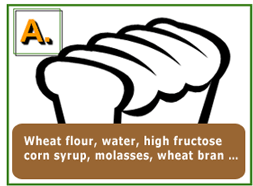
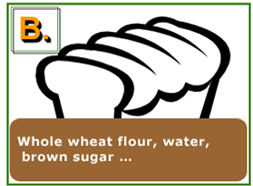
To be sure that a product is whole grain, the
FIRST
ingredient should list one of the following whole grains:
 |
 |
|
‘A’ is NOT whole wheat bread because the word WHOLE is not listed in the first ingredient.
‘B’ IS whole wheat bread.
|
whole wheat -
whole oats/oatmeal
whole-grain corn popcorn brown rice
-
whole rye
-
whole-grain barley
-
wild rice
-
buckwheat
-
tritacale
-
bulgar (cracked wheat)
-
millet
-
quinoa
-
Sorghum
Foods are usually not whole grain products if labeled with these words:
-
multi-grain
-
stone-ground
-
100% wheat
-
cracked wheat
-
seven-grain
-
Bran
Brown Color Does Not Mean It’s Whole Grain!
Bread can appear to be whole grain when packaged in brown bags or when the
bread itself is brown due to molasses or other added ingredients. Conversely, some whole grain wheat flours are white.
|