



HAZWOPER
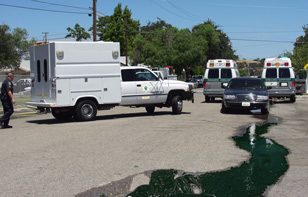 The Hazardous Waste Operations and Emergency Response Standard (HAZWOPER) applies to five distinct groups of employers and their employees. This includes any employees who are exposed or potentially exposed to hazardous substances - including hazardous waste - and who are engaged in one of the following operations as specified by OSHA:
-
clean-up operations - required by a governmental body, whether federal, state, local, or other involving hazardous substances - that are conducted at uncontrolled hazardous waste sites;
-
corrective actions involving clean-up operations at sites covered by the Resource Conservation and Recovery Act of 1976 (RCRA);
-
voluntary clean-up operations at sites recognized by a federal, state, local, or other governmental body as uncontrolled hazardous waste sites;
-
operations involving hazardous wastes that are conducted at treatment, storage, or disposal facilities regulated by RCRA, or by agencies under agreement with the U.S. Environmental Protection Agency to implement RCRA regulations; and
-
emergency response operations for releases of, or substantial threats of releases of, hazardous substances regardless of the location of the hazard.
In California, the applicable regulations for HAZWOPER can be found in Title 8, Section 5192.
All Levels of HAZWOPER Training
Responder Levels
First Responder, Operations Level
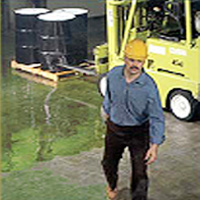
First responders at the operations level are individuals who respond to releases or potential releases of hazardous substances as part of the initial response to the site for the purpose of protecting nearby persons, property, or the environment from the effects of the release. They are trained to respond in a defensive fashion without actually trying to stop the release. Their function is to contain the release from a safe distance, keep it from spreading, and prevent exposures. First responders at the operational level shall have received at least eight hours of training or have had sufficient experience to objectively demonstrate competency in the following areas in addition to those listed for the awareness level, which the employer shall so certify:Know the basic hazard and risk assessment techniques.
-
Know how to select and use the proper personal protective equipment provided at the first responder operational level. Understand basic hazardous materials terms.
-
Know how to perform basic control, containment, and/or confinement operations within the capabilities of the resources and personal protective equipment available with their unit.
-
Know how to implement basic decontamination procedures.
-
Understand the relevant standard operating and termination procedures.
-
HazMat Technicians
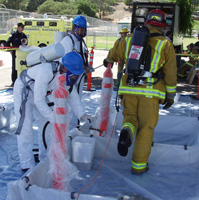
Hazardous materials technicians are individuals who respond to releases or potential releases for the purpose of stopping the release. They assume a more aggressive role than do first responders at the operations level in that they will approach the point of release in order to plug, patch, or otherwise stop the release of a hazardous substance. Hazardous materials technicians shall have received at least 24 hours of training equal to the first responder operations level and in addition have competency in the following areas, which the employer shall so certify: -
Know how to implement the employer's emergency response plan.
-
Know the classification, identification, and verification of known and unknown materials by using field survey instruments and equipment.
-
Be able to function within an assigned role in the Incident Command System.
-
Know how to select and use the proper specialized chemical personal protective equipment provided to the hazardous materials technician.
-
Understand hazard and risk assessment techniques.
-
Be able to perform advance control, containment, and/or confinement operations within the capabilities of the resources and personal protective equipment available with the unit.
-
Understand and implement decontamination procedures.
-
Understand termination procedures.
-
Understand basic chemical and toxicological terminology and behavior.
HazMat Specialist
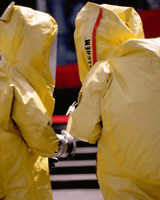
Hazardous materials specialists are individuals who respond with and provide support to hazardous materials technicians. Their duties parallel those of the hazardous materials technician; however, those duties require a more directed or specific knowledge of the various substances they may be called upon to contain. The hazardous materials specialist also acts as the site liaison with federal, state, local, and other government authorities in regards to site activities. Hazardous materials specialists shall have received at least 24 hours of training equal to the technician level and in addition have competency in the following areas, which the employer shall so certify:-
Know how to implement the local emergency response plan.
-
Understand classification, identification, and verification of known and unknown materials by using advanced survey instruments and equipment.
-
Know the state emergency response plan.
-
Be able to select and use the proper specialized chemical personal protective equipment provided to the hazardous materials specialist.
-
Understand in-depth hazard and risk techniques.
-
Be able to perform specialized control, containment, and/or confinement operations within the capabilities of the resources and personal protective equipment available.
-
Be able to determine and implement decontamination procedures.
-
Have the ability to develop a site safety and control plan.
-
Understand chemical, radiological, and toxicological terminology and behavior.
Incident Commander
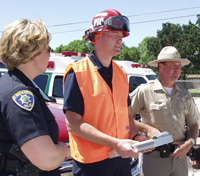
Incident commanders, who will assume control of the incident scene beyond the first responder awareness level, shall receive at least 24 hours of training equal to the first responder operations level and in addition have competency in the following areas, which the employer shall so certify:-
Know and be able to implement the employer's incident command system.
-
Know how to implement the employer's emergency response plan.
-
Know and understand the hazards and risks associated with employees working in chemical protective clothing.
-
Know how to implement the local emergency response plan.
-
Know the state emergency response plan and the Federal Regional Response Team.
-
Know and understand the importance of decontamination procedures.
Continue to Next Chapter